Varnuqel
Free Kit
Free Kit
Couldn't load pickup availability
1. Problem Statement
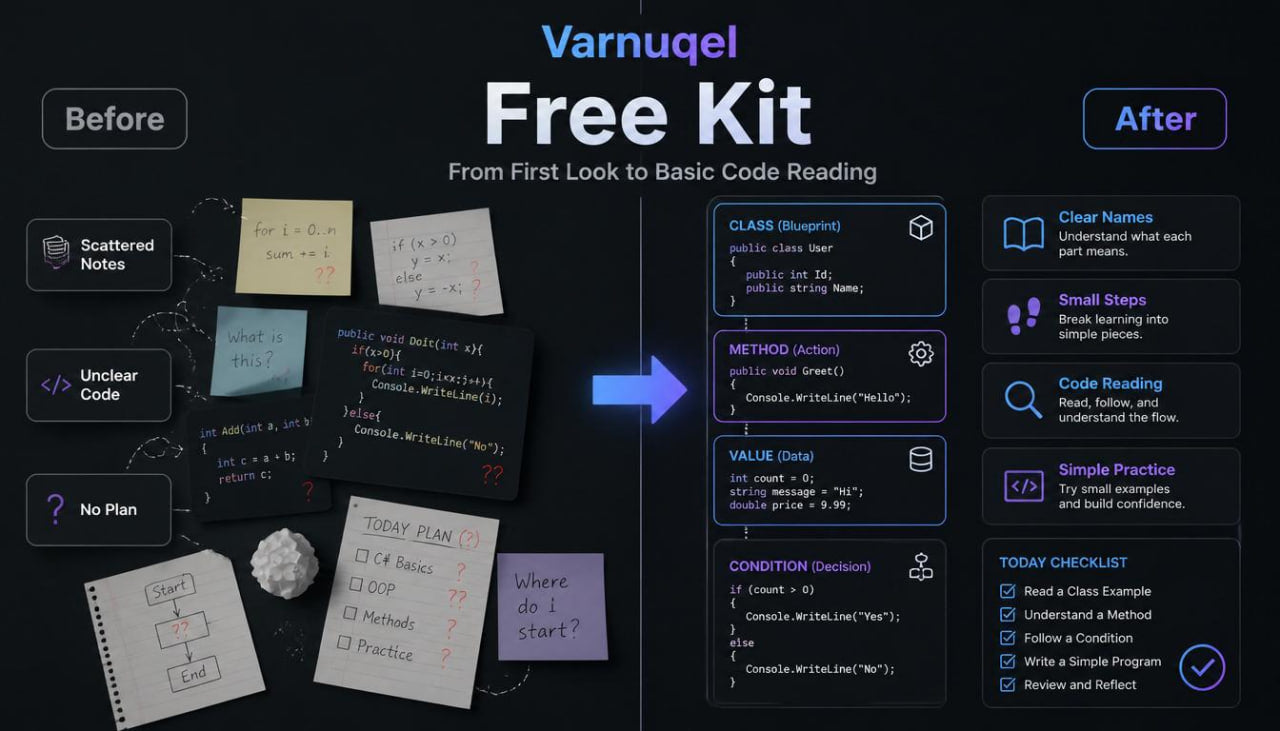
Many learners begin studying .NET Framework through scattered materials, where some explanations are too brief while others move into complex topics right away. This can make it hard to know where to start, which concepts are foundational, and which topics are better left for later. Beginners often see code examples but do not always understand why a certain structure is used in a lesson. Another challenge is that learning without a plan can create confusion: one day the learner reads about classes, another day about configuration, and then moves to data handling without a link between the topics. Because of this, even a small project can feel unclear when there is no calm introduction and no structured route.
2. Solution
Free Kit is created as a gentle entry point where the learner does not begin with overloaded examples. The materials explain basic .NET Framework ideas through sequential steps, short blocks, and practice tasks. Each module has a clear role: first the learner meets the idea, then sees an example, and then completes a small exercise. This approach helps learners connect concepts gradually rather than only reading the material. The plan works well as a first introduction to Varnuqel because it shows the course style without too much detail at once.
3. What’s Inside
Free Kit includes a set of introductory materials that explain how to think within .NET Framework and how to read the basic structure of learning examples. The first module introduces what a framework means in a learning context, why organized code structure matters, and why it is useful to see the connection between project parts. The learner does not start with complex architecture diagrams, but with simple learning elements: file, class, method, variable, input data, and output result.
The second module focuses on basic code logic. It explains how to read small examples, how to distinguish names, actions, and values, and how to notice execution order. The materials are shaped so the learner does not simply copy lines but understands what task each part performs. For example, one fragment may show object creation, another may show a method call, and a third may show result output. Each example comes with a short explanation that breaks the action into clear parts.
The third module introduces structured practice. The learner receives small tasks: read a code fragment, identify the role of separate parts, change a simple value, and describe the logic in their own words. These exercises do not require broad technical background, but they help learners work with the material more carefully. Special attention is given to the difference between passive reading and practical review.
The fourth module introduces common early-stage mistakes. It explains why moving into larger topics without basic structural understanding can be confusing, why names in code matter, how to read error messages without pressure, and how to keep personal notes. Mistakes are not presented as something negative; they are treated as part of the learning process.
The fifth module includes a short review route. It helps learners revisit key ideas: what a module is, how an example is built, where to find the main action in code, and how to describe a fragment in simple words. The learner also receives a short list of topics that can be studied later: classes, methods, basic data handling, project structure, and preparation for practice tasks in the next plans.
4. Who Is This For?
Free Kit is for learners who are just beginning with .NET Framework and want to understand the general learning logic first. It is a suitable choice for those who do not want to move into large technical blocks right away and would rather see how Varnuqel materials are organized. The plan is also useful for learners who have already seen code examples but felt that explanations were fragmented or lacked sequence.
This plan can be used as an introductory set before choosing a broader course. It does not overload the learner with complex scenarios, but it gives a foundation for further study. The learner can see whether the format is comfortable: short explanations, examples, exercises, and review notes. Free Kit is also suitable for reviewing basic concepts if the learner has not worked with this topic for a while.
5. What You’ll Learn
- Understand the basic role of .NET Framework in a learning context.
- Read simple code examples without rushing.
- Distinguish classes, methods, variables, and simple actions.
- Notice execution order in small fragments.
- Describe example logic in your own words.
- See the link between theory, example, and exercise.
- Complete small learning tasks using instructions.
- Keep short notes for topic review.
- Understand why structure matters when reading code.
- Prepare for the next Varnuqel plans.
6. 30-Day Terms
For paid Varnuqel plans, a 30-day period for submitting a refund request may apply according to the store terms. Since Free Kit is a free plan, no payment is charged for it, so the refund process does not apply to this plan. If the learner later chooses a paid plan, the 30-day terms should be reviewed on the checkout page or in the store policy section. The wording is calm, without pressure and without exaggerated claims. The purpose of this block is to explain the basic order clearly so learners understand how Varnuqel terms work.
Self-paced learning overview
- 📁 Digital file available after purchase
- ♾️ Long-term availability
- 🔐 Secure checkout
- 🗓️ Content updated in 2026
Are the courses suitable for beginners?
Are the courses suitable for beginners?
Yes, the materials are built step by step: from basic concepts to practical tasks. Learners can move at their own pace and return to modules for review.
What is included in the learning materials?
What is included in the learning materials?
Each plan includes lessons, explanations, examples, exercises, and structured modules. The content depends on the plan depth and topic range.
Do I need previous experience with .NET Framework?
Do I need previous experience with .NET Framework?
Previous experience is not required for the first plans. More advanced plans are better suited for learners who already understand basic code logic, classes, methods, and project structure.
Share